
Archive
Every festival since 2015 – artists, works and photos.
Turning Point
10 concerts · Kursaal: 10
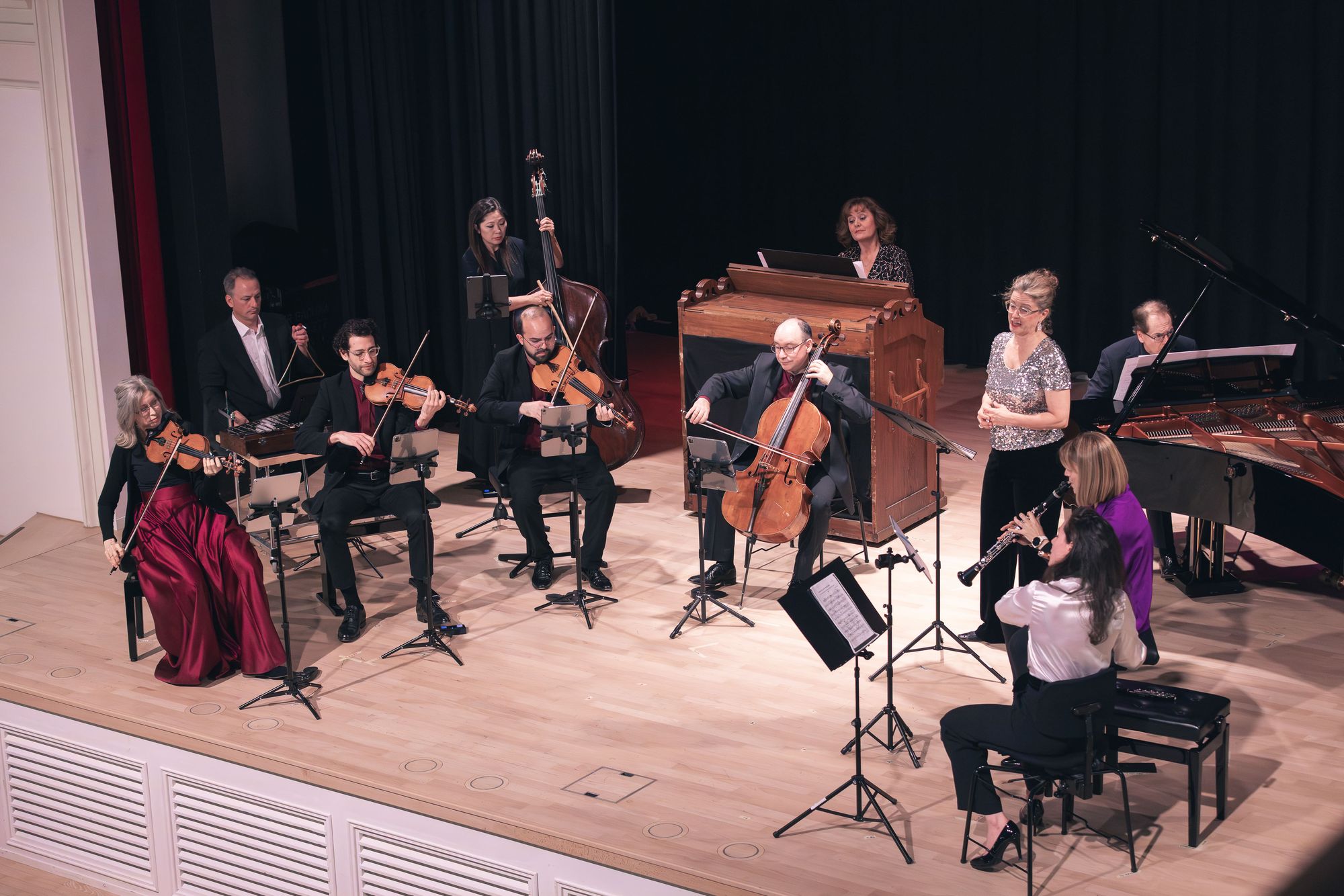
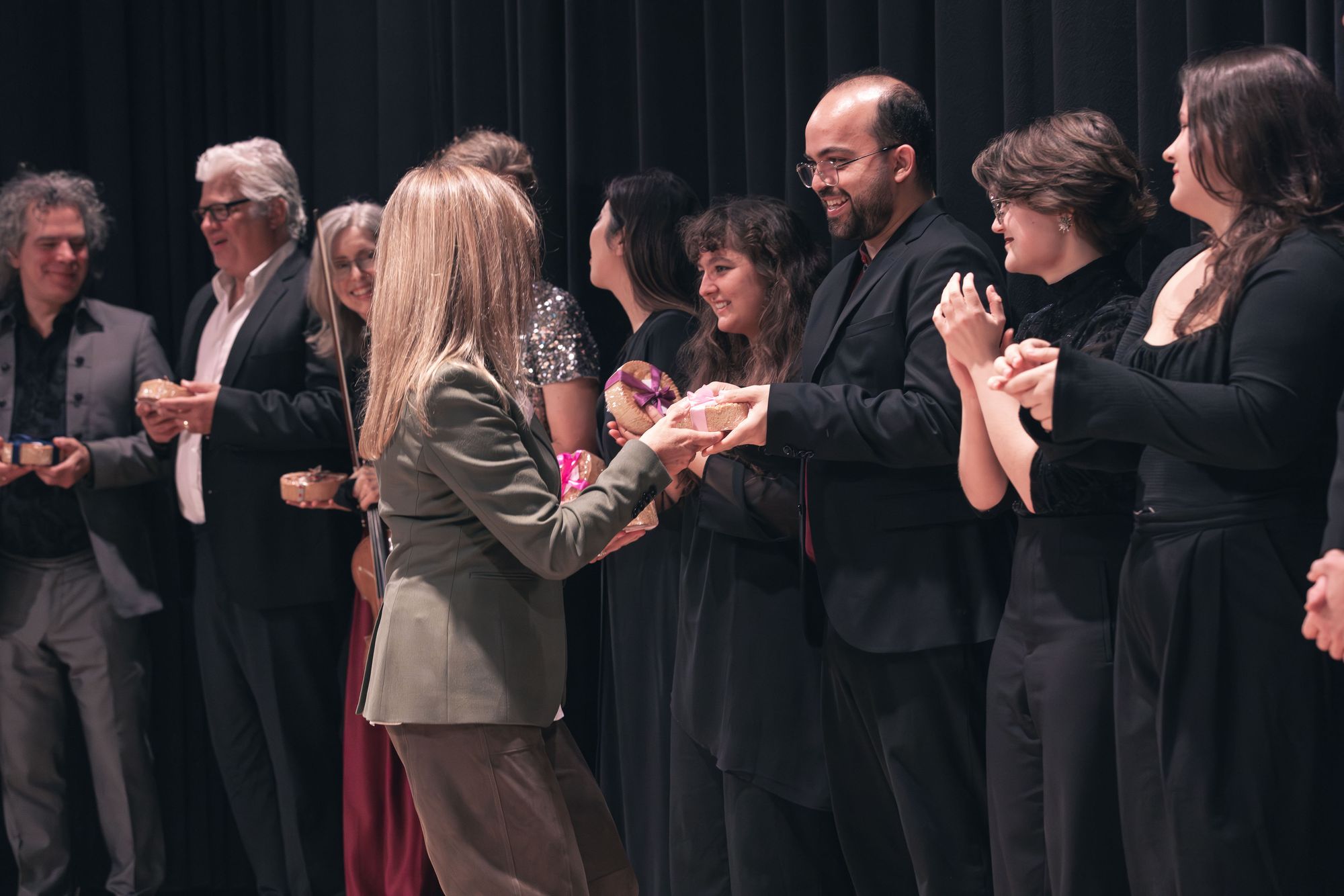
Artists
- Bandonegro Tango Quartet
- Merel Quartett String Quartet
- Seon-Deok Baik Double Bass
- Christoph Berner Piano
- Alessandro D'Amico Viola
- Coraline Fässler Cello
- Benjamin Forster Percussion
- Werner Güra Tenor
- Helena Macherel Flute
- Edouard Mätzener Violin
- Rafael Rosenfeld Cello
- Carlos Roulet Tango Singer
- Laura Ruiz Ferreres Clarinet
- Silvia Simionescu Viola
- Izabella Simon Piano
- Violetta Suvini Violin
- Dénes Várjon Piano
- Liána Izabella Várjon Recitation
- Varvara Vasylieva Violin
- Anke Vondung Mezzo-soprano
- Mary Ellen Woodside Violin
Works by
- Marcin Antkowiak
- Anton Arensky
- Agustín Bardi
- Béla Bartók
- Ludwig Beethoven
- Alban Berg
- Frank Bridge
- Juan Ventura & Nicolás Luis Cuccaro
- Antonín Dvořák
- Gabriel Fauré
- Heinz Holliger
- Olena Ilnytska
- Mischa Käser
- Maxim Kolomiiets
- Gustav Mahler
- Mariano Mores
- Maruja Pacheco Huergo
- Astor Piazzolla
- Maurice Ravel
- Franz Schubert
- Robert Schumann
- Salvatore Sciarrino
- Héctor Stamponi
- Aníbal Troilo
- Ángel Villoldo
- Hugo Wolf
- Eugène Ysaÿe
- Alexander Zemlinsky
About this festival
Turning Points – Not Without Nuance
What is a turning point?
It is term that has become difficult - especially in times when things turn of their own accord, or are turned arbitrarily. Our lives are shaped by constant change and becoming and by turning points of varying degrees of drama.
For cultural life - and particularly for music - the year 1900, the transition into the 20th century, was an exciting, truly dramatic turning point. In Germany, composers - some more hesitantly than others - began to distance themselves from Romanticism. Over the course of the century, it had expanded into a large-scale, post-Romantic avant-garde. The 19th century was also the century in which national identities took clear and distinct shape. Artists in the surrounding countries were each compelled, in their own way, to engage with their very different aesthetic pasts.
Around the turning point of 1900, culture was about two things: farewell and new beginning - a farewell to beloved Romanticism, and a departure toward an uncertain future. That is the idea behind the program: on the one hand, we will experience a rich panorama of musical art from the final decade of the 19th century - with some retrospective glances. That is the farewell. But then we will be fascinated to hear how diverse the search for new aesthetic values in music has become, continuing all the way into our own time.
We must remember that the 19th century itself began with a farewell — a farewell to the rational sobriety of the Enlightenment. Beethoven was the most vigorous exponent of this parting, this turning. He came out of Classicism. His thought and his works led, in their own unique way, into Romanticism and soon far beyond it. Often this can be heard within a single work – for instance in his String Quintet Op. 29, which we will hear on Saturday evening.
In the Romantic arts - in music, the visual arts, and literature - we experience a fascination with everything mysterious, mystical, and melancholic, and a yearning for blissful fulfillment. For the Romantic individual, life was about nature, love, and the longing for the blue flower. The mood was marked by world-weariness and Weltschmerz. Death and transience held great fascination. Tears flowed freely in this 19th century.
It became a century of words. People wrote and wrote - above all, they wrote poetry. The French speak of a revolution in poetics. The “I,” endlessly searching for happiness (usually in vain), came alive. Countless poems were written, on every conceivable level of quality. And composers knew how to translate these rich emotional states into magnificent music. Beethoven had already conceived and written To the Distant Beloved. Schubert, in just over a decade, set six hundred poems to music. We will hear his Swan Song. The figure of the nature-bound wanderer became archetypal: he roams restlessly and unhappily, seeking relief from his unrestrained sorrow. Shortly before the turn of the 20th century, Gustav Mahler set his own texts in the Songs of a Wayfarer. Mahler described himself as a journeyman wandering through a cruel world.
The Romantic and Late-Romantic art song is embedded in a web of chamber music works in which voices from other countries will also be heard - Bartók, Dvořák, Zemlinsky, Frank Bridge and Hugo Wolf, Eugène Ysaÿe and Anton Arensky. Thus arises a luminous panorama of the diverse expressions of late-Romantic musical language in Europe at the end of the century. In each program, there will be - here and there, wistfully - a kind of farewell to Romanticism, to its themes, and to its aesthetic.
Then comes 1900 - the turning point. The great leap into Modernism begins, in all the arts. They draw closer together - and this is something to see, to read, and not least, to hear. Quite different from the early 18th century, when there was a unified rejection of Enlightenment rationalism, the early 20th century opens up a multitude of divergent paths. For some, it was about literally rescuing the Romantic idiom; others sought to develop a new musical aesthetic out of Romanticism - and thereby transcend it. This was undoubtedly the case with Gustav Mahler and Richard Strauss. And finally, there was the deliberate shattering of all Romantic enchantment of soul and sound - all German inwardness. In music, composing with the twelve-tone series broke apart traditional tonality. An early work by Alban Berg of the Second Viennese School bears early witness to this.
What is exciting is that composers could not escape the spirit of awakening that prevailed at the century’s dawn. We hear Bartók’s early Piano Quintet, shaped by post-Romantic fervor, and we recognize his deep engagement with the folk music of his Hungarian homeland - and how, from that, he developed his own distinct modernity. The Elegy for piano foreshadows what was yet to come. Mahler’s first song cycle is an autobiographical, time-bound yet timeless testament of the waning Romantic era. But already in the first movement of his First Symphony, themes from the Songs of a Wayfarer appear, and his development continues toward a monumental musical language that would only be understood and appreciated decades later. We will have the great pleasure of hearing this First Symphony in the four-hand piano version by the composer’s close friend Bruno Walter, performed by Dénes Várjon and Izabella Simon.
The outlook on the musical diversity of the 20th century is enriched by contemporary accents. Here, “turning” occasionally takes on a new meaning. Music may revolve around a single tone, as in Sciarrino, or around an idea, as in Olena Ilnytska, who composes a turning and twisting whirlwind. Finally, we can look forward to a world premiere - Autumn by the inventive Swiss composer Mischa Käser.
The turning point to the 20th century also marks something significant in the development of general musical taste. The people who attended concerts in the Romantic age - that is, in the century before last - listened primarily, and with great devotion, to contemporary music. They were of one heart and mind with the composers. That changed dramatically in the 20th century - and that gives us much to ponder.
Elmar Weingarten
Aebi-Lüthy StiftungBlanken Schlemper StiftungElsener Gut StiftungSarna JubiläumsstiftungThyll Stiftung
Div. Hotels: Zimmer für MusikerMäzen